My wife and I landed in Mbale on a breezy evening, with a backpack full of maps and curiosity. We settled into our beautiful lodging on the slopes of Mt Elgon and opted to dine on a local staple – tasty malewa (bamboo shoots), millet bread and plantain. Malewa is prepared by harvesting young bamboo shoots from Mount Elgon, smoking them for preservation, and then soaking them in baking soda water to soften them before slicing and simmering them in a groundnut stew.
The next morning, the town woke up in layers: a coffee aroma drifting from every corner, the gentle clack of market scales, and a chorus of friendly greetings that followed us like a welcome committee everywhere we went. My wife squeezed my hand, and I could tell she was humming with that brave, “let’s see what the day hides” kind of energy.

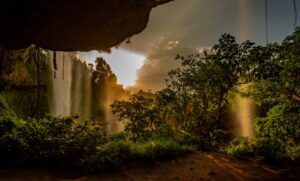
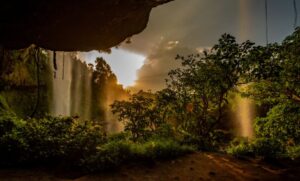
Sipi Falls stands at the edge of a steep green canvas, three turquoise curtains tumbling down into a mossy pool, with the village tucked snugly into the hills below. Our guide, a wiry man with a sun-bronzed smile, tied the ropes with the calm precision of someone who had threaded many lives through the same song. He warned us to trust the mountain, not our fear, and then handed us helmets as if we were swapping stories with old friends.
The first step over the edge felt like stepping into a new language. My heart did that little flutter-jump, then steadied as the rope groaned and sang through the pulley. The air was fresh and a little salty with mist, and every inch down the cliff was a tiny postcard: the valley unfurling, fields stitched in neat squares of maize and banana, and villagers waving from a path that snaked along a ridge.

Halfway down, we paused to drink in the view. The guide pointed out the way the river below braided through the landscape, a silver thread that seemed to pull the whole region toward a common pulse. The second descent carried a gentler confidence. We celebrated with a goofy, triumphant high-five that felt like we’d unlocked a tiny corner of the world that would forever belong to us.
Fuelling up afterwards shifted the day from adrenaline to culture. A short ride on a boda boda – a bright little motorcycle taxi with a helmet that barely fit our heads, took us through a patchwork of village roads where the earth smelled of fresh soil and stories. We wound up at a coffee farm where a kindly farmer welcomed us with a broad grin and offered a cup of warm coffee, beans still smoking on the pan as he explained the harvest process in a light, unhurried tone. We watched the beans crackle and flare under heat, learned how they were dried on terraces that looked like the steps of a great green staircase, and tasted a brew that carried notes of chocolate and caramel, a gift from the soil and sun.
Nearby, a bustling market spilled colour and sound into the street. Vendors called out their wares; groundnuts, dried fish, mangoes the colour of sunset; and shared small bites with us: a roasted cob of corn here, a sweet tamarind sample there. An elderly woman braided a bracelet on my wife’s wrist in exchange for a story about our hometowns, and we traded a memory for a new piece of folklore.
Lunch was a communal table under a thatched awning: matooke, chapatti, beans, roast chicken, greens and veggies. A hearty 10/10! We ate with our hands, politely clumsy at first, then perfectly at home, as the market’s hum settled around us like a warm blanket.
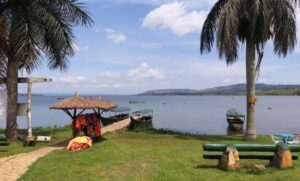
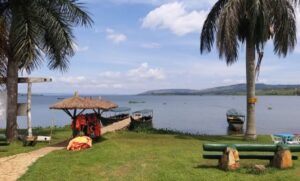
That night at the lodge we reminisced about our past few days in this beautiful country — canoe rides on tranquil lakes, mornings wrapped in laughter, wild animal encounters, and afternoons spent listening to the rain on a thatch roof. Uganda had given us the thrill of a cliff and the gentleness of a market, the adrenaline of the fall and the warmth of a shared meal. And as we drifted to sleep, we knew we’d return not just for another rush, but for the people, the farms and the stories that make travel feel like a friendship you never want to end.