From its early days as a horse market and slum, Mayfair has risen to the best address in London. Mark Eveleigh checks into the Athenaeum Hotel, home to celebrities, and explores the quaint alleyways of the British capital’s chicest quarter.
“Legend has it that Beau Brummel was such a dandy that he polished his boots with champagne froth,” our guide tells us as we stand in front of a terraced townhouse in Mayfair on an unexpectedly crisp and bright English spring day. I crane my neck up at a plaque high on the old brick wall: ‘Beau Brummel, Leader of Fashion, lived here’ it says.

“He was such an incredible bon viveur,” the guide continues, “He used to get his servants to carry him from inside his house to the lobby of his gentleman’s club so that he wouldn’t have to soil his boots on the mucky streets of Mayfair.”
These days, it is hard to imagine anything mucky in Mayfair. A century and a half after Brummel lived here, it is still the most fashionable residential area in London. Richard Roques is a playwright and guide who has been leading walks around London for more than 20 years.

Better known by his working name Richard III, Roques has acquired a wealth of quirky knowledge that brings the history of one of the world’s most colourful cities to life.
“Mayfair was named after an agricultural fair that was held here in the 1700s,” he had told us when we met him outside Green Park tube station for the start of our walk. “Along with shepherds and horse traders, it attracted countless vagabonds, cut-throats, thieves and prostitutes. Finally, the mayor banned the fair and turned the grubby Mayfair grounds into what would become one of the world’s most expensive places to live.”
If you just want to park your car in Mayfair, it will cost you £33 (USD 50) for 24 hours but if you actually want to live here, the cheapest place you might find – a converted stable in Hays Mews for example – is likely to set you back about £3 million (USD 4.6m). If that’s just small change to
you, then something a bit more spacious like ‘The In and Out Club’, abandoned for 15 years but sold in 2022 for £115 million (USD 176m), might take your fancy.
The streets of Mayfair are peppered with the names of the rich and famous who once lived here and the Ferraris, Aston Martins and Maseratis that make up the average Mayfair traffic jam betray the presence of those who still do. Jimi Hendrix claimed to be haunted by the spirit of George Frideric Handel after he moved next door to the Brook Street house in which the composer had died 200 years before. Queen Elizabeth herself was born in a house that is now a Bentley showroom (17, Bruton St), and Charles Rolls worked nearby on a little-known manufacturing project that would later become Rolls Royce.
Perhaps Mayfair has always been most desirable for its green areas. The bay window of my Athenaeum Hotel suite looks across Piccadilly (with its bellowing red double-decker buses) to the lush gardens of the Green Park (scene of a rebellion in 1554 and private hunting grounds for the king thereafter). Beyond the hotel lobby, with the elegant doorman tipping his top-hat, I can walk just a few minutes east to the sprawling lawns and lakes of Regent’s Park.
Scratch the polished surface of Mayfair’s glitz and glamour and you will uncover a dark and grizzly history. On the north side of Regents Park, there’s an underground river called the Tyburn and it was here that some of London’s gruesome moments were recorded. The gallows known as the Tyburn Tree (the spot is marked on a traffic island near Marble Arch) was London’s most famous public execution spot. Up to 24 people could be hanged at a time and on the way to the hanging trees, the condemned men and women were allowed to stop for one last drink – which, with gallows-humour, was known as ‘one for the Tyburn Road’.
These days, a pint for the Tyburn Road will cost you about £5. There’s not much in Mayfair that is cheap: the chic butcher shop here sells prime beef steak for £60/kg (if you order wagyu beef it will set you back £135/kg). Mr Patel owns a little corner shop at 24 Down Street. It is the sort of humble little grocery store you’ll find all-over the city but which seems delightfully out of place – almost rebellious – next to the Athenaeum.
“I’ve been here for 27 years. I think the people who live and work here like the feeling that there’s a little place remaining that has not been bought up as a bistro or a designer dressmaker,” Patel tells me, adding, “Even in this property, there’s more than meets the eye. Under this building, there’s an abandoned tube station. It was only open for a few years – it turned out that there weren’t many people in Mayfair who used public transport. Winston Churchill slept under my shop during the wartime bombings.”
Like Beau Brummel – that ‘leader of fashion’ – Mayfair has seen many changes of fortune. Brummel himself had the bad sense to have a public dispute with the king and ended his days in poverty in a lunatic asylum in Europe. No doubt he died pining for a chance to set his boots once more in the mucky lanes of Mayfair.
Where to Stay
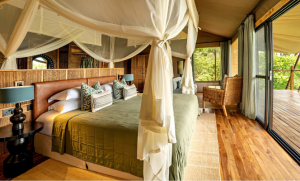
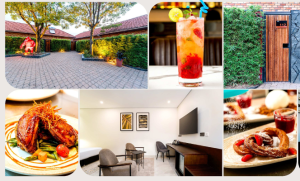
The Athenaeum Hotel (www.athenaeumhotel.com / Tel: +44 20 7499 3464) is a majestic 5-Star hotel overlooking Green Park. The Hollywood Reporter once wrote that ‘there are more movie stars to be seen in London’s Athenaeum Hotel than in the Polo Lounge of the Beverley Hills Hotel.’ Steven Spielberg even edited ET, First Encounters and Indiana Jones in an edit suite that he
installed in the adjoining apartment to his own. A favourite with countless celebrities today, the historical building dates back to 1850 and the extravagant interior was described by Charles Dickens. Room rates are from £380 (USD500) per night. The Athenaeum’s restaurant is hard to beat and the Whisky Bar is stocked with the largest selection of whiskies of any hotel in London (300+ varieties).
Walking Tours
London Walks (www.walks.com / Tel: +44 20 7624 3978) offers a mind-boggling variety of tours around the city priced at just £9 (USD14) per adult. Children under 15 aren’t charged. Their Old Mayfair tour is described as ‘the champagne & caviar of London walks’ and is guided by Richard III, who is one of London’s most fascinating guides. His Ghosts, Gaslight and Guinness night walk around ‘the most haunted city in the world’ is a deliciously spine-tingling experience that gives a unique insight into London’s dramatic history.
Pubs
History is everywhere in old Mayfair – in the little cobbled square of Shepherds Market, and among the tailors of Savile Row, or the stylish gentlemen’s shoe-shops and purveyors of vintage watches in Burlington Arcade. Most of all, you find it in some of the oldest pubs in London. The Coach and Horses is the oldest in Mayfair (established in 1744) and still has a model coach swinging as a reminder of the days when few people could read. The Punch Bowl at 41 Farm Street is now owned by film director Guy Ritchie but has been serving punch to ‘politicians and military gentlemen’ since 1750. Other top bars are the Fumoir at Claridges, The Maine, and Hush. For afternoon tea, try Sketch.
Bus Tour & Boat Tour
Even for Londoners, The Big Bus Company (www.bigbustours.com) offers a second-storey viewpoint of the city that is wholly different from the street-level view for £29 (USD42). Along with the world’s most knowledgeable taxi drivers, London boasts some of the most entertaining guides with the quirkiest outlooks. The bus tour is best combined with a free boat cruise between Westminster and Tower Bridge, offering an otherwise impossible look at the famous Traitor’s Gate and the premonitory Bronze Lions’ heads in the wharf.
“Londoners say that if the lions are drinking, then London will be sinking. But if the lions get ducked, then London is well and truly…flooded,” quips Jack Murphy, an excellent guide on the City Cruise.