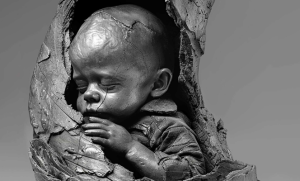
The Benin Bronzes are a famous collection of thousands of metal plaques, commemorative heads and sculptures. They were made from the 14th century onward by the Edo people in the West African Kingdom of Benin, now part of Nigeria. This year, London’s Horniman Museum is handing back ownership of its 72 bronzes.
When the Benin Bronzes first arrived in Europe, they did not enter as artworks in any ordinary sense. They came as trophies — proof that distance, steel and opportunism could turn a living culture into objects that could be inventoried, sold and exhibited. Today, as bronze heads, plaques and intricate reliefs continue their slow return to Nigeria — most recently reported from London and other places in Europe
— the question is no longer only how they got there. It is why they stayed there for so long, and what it means to see an empire’s spoils displayed as if they were “neutral heritage”.
From Palace To Port: The Violence Behind The Collection
The story begins in the late 19th century, when the British Empire treated West Africa as a map to be managed rather than communities to be understood. In 1897, after violent clashes in the Kingdom of Benin (present-day southwest Nigeria), British forces mounted a punitive expedition that culminated in the destruction of the royal palace at Benin City. With walls breached and sacred spaces looted, thousands of objects were seized including bronze plaques and cast figures, ivory carvings, textiles, regalia and ceremonial items that embodied political authority and spiritual meaning.
The logic was straightforward. If the empire could remove the symbols of power, it could replace them with its own. And so the Benin Bronzes travelled through a pipeline familiar to colonial history: from devastated streets to European private collections, from there to museums eager for masterpieces, and eventually into galleries where conquest became aesthetics. The works were catalogued and curated, sometimes with a troubling silence about their origin, sometimes with thin references that softened the central truth: they were taken through force.
“Art” Without The Context Of Theft
European museums have long argued that they preserve, maintain, conserve and protect. Preservation can be real. But art, unmoored from the conditions under which it was taken, is also a kind of forgetting. When the Benin Bronzes are displayed as if they simply “belong in the world,” the museum performs a quiet alchemy: transforming stolen cultural property into universal beauty, while the violence that produced the collection fades into footnotes.
That matters because the Bronzes are not decorative in a vacuum. They are embedded in the history of the Benin court, the language of its craft, and the ceremonial systems that gave them purpose. To look at them purely as aesthetic objects is to risk turning political theft into a museum pastime.
In Nigerian tradition, art was never separate from governance and identity. The plaques recorded events, celebrated kings and queens, and served as a visual archive. They were produced by the Guild of Benin Bronze Casters, now located in Igun Street, also known as Igun-Eronmwon Quarters. Cast in brass and bronze alloys with remarkable technical precision, they demanded expertise both in making and in reading. To encounter them without the accompanying cultural knowledge is to see only the surface of a much deeper system of meaning.
The Return From London & What It Signals
Why does it matter that Benin Bronzes are being returned from London? Because restitution is not only about objects. It is about accountability. It interrupts the centuries-old narrative that European institutions are the rightful custodians of African cultural treasures, and it asserts something more radical: that the origin of an artwork is part of its meaning.
Returns also change how museums understand themselves. If a museum can hold the Bronzes, it can also confront what that holding represents— an imbalance of power disguised as stewardship. The current wave of repatriation across Europe and beyond suggests a shift in public conscience and policy, but it also puts pressure on institutions to tell the whole story, not just the flattering one.
When these bronzes come back to Nigeria, they return not to a void but to communities equipped to interpret them; communities who were never “users” of someone else’s collection, but the makers and keepers of their own history. The significance is not that Europe has finally “done the right thing” in a benevolent mood; it is that Nigeria is reclaiming narrative control.
A Question Of Ethics, Not Taste
The Benin Bronzes remind us that art can travel, but justice is not optional luggage. Cultural objects moved through an empire’s violence will not become ethically neutral simply because they are housed under glass with polished labels. The moral question is not whether museums have conservation skills; it is whether the power to display should override the right to recover.
Repatriation, then, is not an ending. It is the beginning of a more honest relationship between cultures and institutions, one that treats artworks as living inheritances rather than spoils of conquest. And as more pieces reach Nigeria, the most important change may be this: the Bronzes can finally be seen not as evidence of European acquisition, but as testimony to African genius — made with purpose, carried through catastrophe, and now, at last, returning to their rightful world.