It could happen at 30,000 feet. A menu card unfolds, and a passenger is asked what they would like to begin with. Long before they walk through a local market or sit down for their first meal in a new country, they may already have had their first taste of the destination.
A meal served on an aircraft might seem like a small detail in a traveller’s larger experience. But food has a remarkable way of carrying a sense of place. A particular spice, an unfamiliar ingredient, or a dish prepared in a traditional way, can offer something a map cannot. It is a first impression of how people live, what they value, and what they have carried forward through generations.
This is why food has become such an anchor of modern travel. Today’s traveller is no longer satisfied with merely seeing a destination; there is a growing desire to experience it, to understand its people, and to discover its traditions and encounter the everyday details that make one place distinct from another. Increasingly, that search for authenticity leads directly to the table.
In Africa, food is history in motion. The continent’s cuisine reflects centuries of exchange. Ingredients travelled along trade routes, recipes crossed borders, and communities cooked with the seasons. A single onboard tray carries a shared history, commerce and heritage. Let me take you around the Pearl of Africa’s culinary experience. The Flying Crane is yet to live up to its full offering.
Uganda captures this diversity. Here, food changes with the landscape. In the central region, matooke offers comforting softness, often paired with groundnut stews and smoked meats. There is also luwombo, with its unmistakable aroma of meat or chicken steamed gently in a banana leaf, letting the flavours of groundnuts, spices and stock deepen as it cooks. Luwombo has been on the Uganda Airlines menu before. In fact, it was a signature dish on the Airline’s maiden flight to London. One may wonder why it is no longer served on board. The truth is practical: luwombo is as delicate as it is delicious, and a dish built around slow, patient cooking does not always lend itself to the consistency required when preparing hundreds of meals at altitude.
Western Uganda tells its own layered story. Ankole’s identity is written in its dairy and cattle heritage, like eshabwe, a rich ghee-based sauce made by whisking aged ghee with a little water and salt until it turns white and foamy, often served alongside millet bread or kalo. Bushera, a fermented millet or sorghum drink, is also part of the region’s food culture and is traditionally offered as a welcome gesture. Further north, among the Batooro and Banyoro, dishes such as firinda are made from peeled dry beans, boiled and mashed with ghee into a smooth purée. Among the Bakonzo, sombe, made from pounded cassava leaves and cooked to a rich green dish, is a familiar part of the table.
In the east, among the Bagisu of Mount Elgon, malewa, made from bamboo shoots harvested from the mountain’s forests, is slowly prepared into a tangy distinctive dish that reflects the landscape’s resourcefulness. Across the eastern plains, atap, made from finger millet and sorghum flour, is paired with eboo, a sauce of okra leaves, or etigo and odii, a deeply roasted groundnut and sesame paste. Sweet potato slices are sun-dried into amukeke, a long tradition of preserving food for later. Further south, communities cook from the water, anchoring their plates to the lake and savouring fish delicacies.
And in the north, among the Acholi and Lango, malakwang, made from roselle leaves and often combined with odii/peanut paste, brings a tangy taste to the table and is commonly served with kwon kal, a thick millet bread. Indigenous grains and sesame, locally known as simsim, are worked into slow-cooked pots that reveal an entirely different rhythm of life.
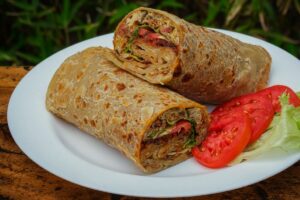
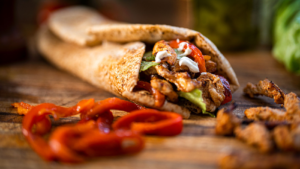
Before any main dish reaches the table, Uganda has plenty to nibble on. We have muchomo goat or beef grilled over charcoal. And gonja/plantain, roasted until its edges caramelise, perfect for eating on the move. In season, there is nsenene fried grasshoppers, a much-loved delicacy. For something sweeter, try kabalagala, small banana pancakes. Somewhere among all of this sits the Rolex, a rolled chapati wrapped around eggs, tomato and onion, born on the streets and now found everywhere from roadside stalls to university hostels. It is simple, filling and unmistakably Ugandan.
Every Ugandan dish is a story worth telling; each is shaped by place. But an interesting development is unfolding alongside the growth of culinary travel: the destination is beginning to travel too. Airlines are uniquely positioned in this space. An aircraft is one of the few places where people from different countries, cultures and backgrounds sit side by side, sharing the exact same window of time. The journey may cross thousands of kilometres, but the cabin temporarily becomes a microcosm of global meeting points.
This is where inflight dining takes on a different significance. A meal onboard can introduce a traveller to a destination’s character before arrival. It can offer a comforting, familiar flavour to someone returning home, or an exciting, unfamiliar one to someone visiting for the very first time. It creates curiosity about an ingredient, a dish, or a tradition, prompting a traveller to seek it out the moment they land.
Beverages such as coffee, tea and alcohol often define how cultural settings relax, unwind and celebrate. Uganda is home to Arabica coffee grown on volcanic mountains; Robusta and colonial coffees have for centuries teased our nostrils with unmatched aroma, roasted and brewed to perfection. Our teas and coffees are traceable, from smallholder farmers whose hard labour can’t go unrecognised, bringing this tasty goodness to our coffee tables and flights.
For a national carrier, this opportunity is even more meaningful. Uganda Airlines carries Uganda beyond its borders every time an aircraft takes off. The physical destinations are part of that story, but so are the sensory experiences created along the way. The hospitality, the warmth of the welcome, the service, and, naturally, the food. An inflight meal becomes a quiet, elegant form of cultural diplomacy. It does not need to explain itself. Sometimes, a flavour is enough.
A profound economic legacy also lies behind what reaches the passenger’s tray. Food lines connect the aviation industry directly to local farmers, independent producers, and on-the-ground agricultural supply chains. When local ingredients are prioritised, the benefits of tourism extend far beyond the aircraft cabin into rural communities.
Recipes are among the few things communities pass down through generations without written instructions. They survive through repetition; a child watching a grandmother cook, a parent teaching a child, or a village preparing a feast for a celebration. Every time those traditions are shared, a piece of cultural history stays alive. Travel simply helps carry those stories further.
At 30,000 feet, somewhere between where you have been and where you are going, a simple meal becomes something much more: a taste of a place, a piece of living heritage, and an open invitation to discover the story waiting on the ground. This festive season, fly with Uganda Airlines, taste the Ugandan Rolex, and thank me later.