Mabamba Swamp is a birders’ dream destination. It is home to 300 bird species, including the massive Shoebill – Uganda’s most sought-after bird. It is part of the list of World’s Wetlands Of International Importance directed by the Ramsar Convention.
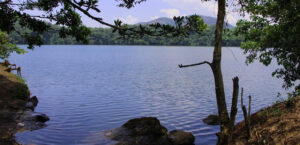
Seated amidst the tranquil waters of Lake Victoria, the 17000-hectare Mabamba Swamp, affectionately known as “The Avian Haven,” is renowned for its pivotal role as a crucial habitat for a myriad of bird species and stands as a sanctuary for birding enthusiasts and nature aficionados. This unassuming paradise, often overshadowed by its renowned counterparts, is a testament to the distinctive allure of the uncharted.

As the seasons ebb and flow, Mabamba becomes a focal point for a mesmerising spectacle of avian migrations. Every year, the swamp attracts a kaleidoscope of over 1.2 million migratory birds. Some species, especially the Palearctic migrants, fly from as far away as Siberia non-stop. Visitors are afforded the rare opportunity to witness this awe-inspiring phenomenon as flocks of winged wanderers transform the island into a bustling avian thoroughfare, creating an unforgettable spectacle. After over five months at Mabamba, these birds fly back to Europe for breeding.
At Mabamba, the star of the show is the Shoebill. With a height reaching up to 5ft and a wingspan of 8ft, Shoebills are truly awe-inspiring creatures and searching for these prehistoric-like birds on a dug-out canoe is quite an experience! One of their most striking features is their remarkable hunting strategy. Standing motionless for hours, they wait for their prey, consisting of fish, frogs and sometimes even small mammals.

Mabamba Swamp has more to offer than just the Shoebill. It hosts an average of 190,000 birds and has 38% of the global Blue Swallow population and the globally threatened Papyrus Yellow Warbler. As you venture through this breathtaking wetland, keep your eyes open for other remarkable (aquatic) bird species, such as the 3³African Jacana, Lesser Jacana, Pied Kingfisher, Malachite Kingfisher, Marsh Harrier, African Pygmy Goose, Whistling Duck, Grey Crowned Crane, Swamp Flycatcher, Western Osprey, Red-chested Sunbird, Papyrus Gonolek, Blue Swallow, Blue-breasted Bee-eater, Blue-headed Coucal, Snowy-crowned Robin-chat, Sooty Chat, and the Eastern Grey Plantain-eater.
The swamp’s diverse ecosystem is also home to fascinating wildlife like the Nile Crocodile, Otter, Monitor Lizard, Vervet Monke, and Sitatunga (a rare swamp-dwelling antelope), adding to the excitement of your Shoebill safari
If you want to maximise your chances of seeing the Shoebill or if you wish to explore more of the Mabamba Wetland Area, we suggest booking one or two nights near the Mabamba Swamp in Entebbe. Check out Nkima Forest Lodge, Mabamba Lodge or Tilapia Lodge. Staying nearby also helps to get to Mabamba Swamp early enough to search for the Shoebill, which is more active during the golden hour, when the sun is still low on the horizon.
Mabamba is named after a lungfish locally known as ‘mamba ‘, a favourite food of shoebills, and there are swarms of lungfish in the swamp because a significant number of the Baganda people do not eat them – the Emamba clan of Buganda is named after lungfish. There are other areas where one can spot the Shoebill in Uganda, such as Delta Point in Murchison Falls National Park, Lake Mburo National Park, Ziwa Rhino Sanctuary, and Semliki Game Reserve.
SIDEBAR
In 2006, Mabamba Swamp was designated a Ramsar Site and wetland of global significance due to its rare and endangered bird species like the Papyrus Yellow Warbler, Shoebill Stork, Blue Swallow, and Sitatunga (swamp antelope). The Ramsar Convention, an intergovernmental treaty established in 1971 in Ramsar, Iran, aims to promote the conservation and sustainable use of wetlands worldwide. This recognition has elevated Mabamba Swamp to an Important Bird Area (IBA), drawing birdwatchers to Uganda.
The most convenient way to access Mabamba Swamp from Entebbe is by speedboat across Lake Victoria, offering a scenic and adventurous journey while passing by Entebbe town and the airport. Speedboat travel to Mabamba takes approximately 45 to 50 minutes, with rental options available from select hotels in Entebbe or the Entebbe Sailing Club.
Large speed boats are unsuitable for navigating the papyrus swamps, requiring a switch to smaller dug-out canoes upon nearing the wetland. As your boat glides through the reeds, keep a sharp eye out for birds and wildlife with guidance from your expert. The tranquil swamp gradually unfolds into grassy expanses teeming with butterflies and lotus flowers.
Guided birding tours, typically lasting four hours and extendable upon request, are well-organised affairs with skilled guides coordinating sightings of the prized Shoebill. The best birding season spans September to March, when migratory birds flock to Mabamba from Europe. Advance tour booking is recommended for seamless arrangements, ensuring early morning pick-up by your tour operator or driver for a rewarding birding adventure.
Guided tours cost around 50 USD per person, with full-day tours priced at about 120 USD per individual. To enhance your experience, pack essentials like a backpack, food, binoculars, insect repellents, hat, sunscreen, rain jacket, trousers, and long-sleeved shirts.
Female Shoebills lay two eggs every five years, typically raising one chick while using the other as a backup. Fledglings achieve flight proficiency at around 112 days yet continue to be fed by their mother for an additional month or two.
Pullout quote:
Every year, Mabamba attracts over 1.2 million birds. Some species, especially the Palearctic migrants, fly from as far away as Siberia non-stop. After over five months of stay at Mabamba, these birds fly back to Europe for breeding.